
MARBLES EMPERADOR
BEST-SELLERS
2024-07-24
Very similar to marble, and often described as such, Emperador is technically a dolomitic breccia, meaning fragments of dolomite bonded together by carbonate cement.
Classified among the most elegant natural stones, Emperador marble is also robust, long-lasting, and particularly resistant to wear, making it a suitable material for both interior and exterior projects.
Depending on the shade of the background colour, several varieties of Emperador marble can be distinguished. In this article, we focus on Emperador Dark and Emperador Light, the Spanish Emperador marbles that can be counted among our best-sellers.
Type: MARBLE
Finishes: POLISHED, HONED, BRUSHED
Colour: LIGHT OR DARK BROWN WITH WHITE VEINING
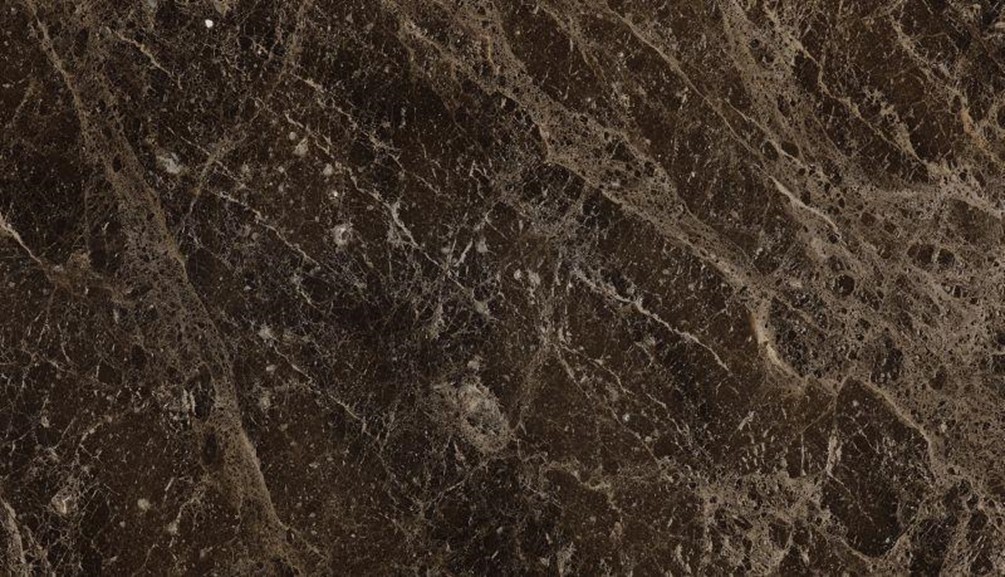
Geological origin and geographical origin of the Spanish Emperador marbles
Geological Origin
Unlike metamorphic marbles (such as Carrara), which originate from complete recrystallization caused by extreme heat and pressure, Emperador marble formed during the Upper Cretaceous period (approximately 65–95 million years ago) through a metamorphic process affecting sedimentary rocks, leading to recrystallization of calcium carbonate.
As a result, it is characterized by multiple colour variations derived from the presence of different minerals which, blending together “like a work of art,” create shades and veining.
The brown background of this marble is due to the presence of iron oxides and bituminous clay impurities, while the white or crystalline veins are pure calcite fillings that occupied fractures in the rock during tectonic movements.
In petrography, it is classified as a bioclastic sedimentary limestone, characterized by a mosaic-like structure that gives it its “fragmented” yet harmonious appearance.
Geographic Provenance
The best-known and most widespread type of Emperador marble — the one commonly referred to when speaking generally of “Emperador marble” — is the variant with a brown background interwoven with white and golden veins: Emperador Dark.
Emperador Dark and Emperador Light are the only variants of Spanish origin.
Emperador Dark is quarried in the Yecla area (Province of Murcia) and extends toward Caudete (Province of Albacete). This is where the most prized variant is extracted, characterized by its deep dark tone.
Emperador Light marble is mainly quarried in the Buñol area (Province of Valencia) and in some parts of the Alicante province (such as Pinoso). Its lighter color is due to a lower concentration of organic matter and oxides during sedimentation.
There are many other Emperador marble variants available on the market, such as Emperador Silver and Emperador Brown, mostly originating from Turkey.
However, the Spanish variety of Emperador marble remains the benchmark standard for compactness and for the distinctive “spiderweb” pattern of golden veining that made it famous in Baroque and contemporary architecture.
Spanish versions: Emperador Dark and Emperador Light
Emperador Dark
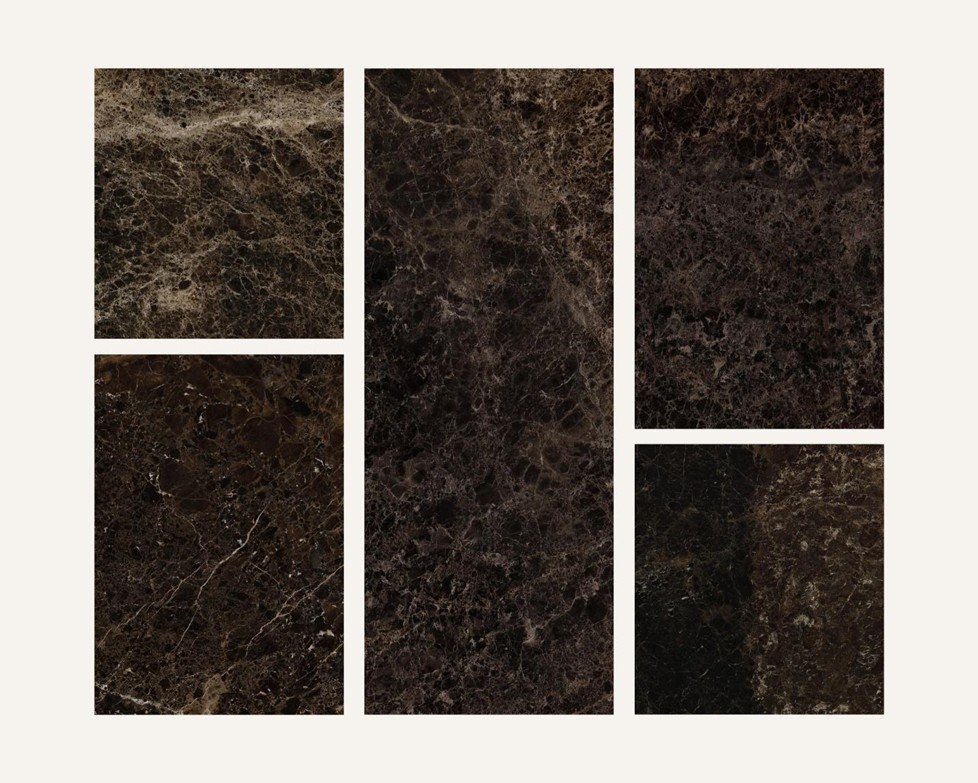
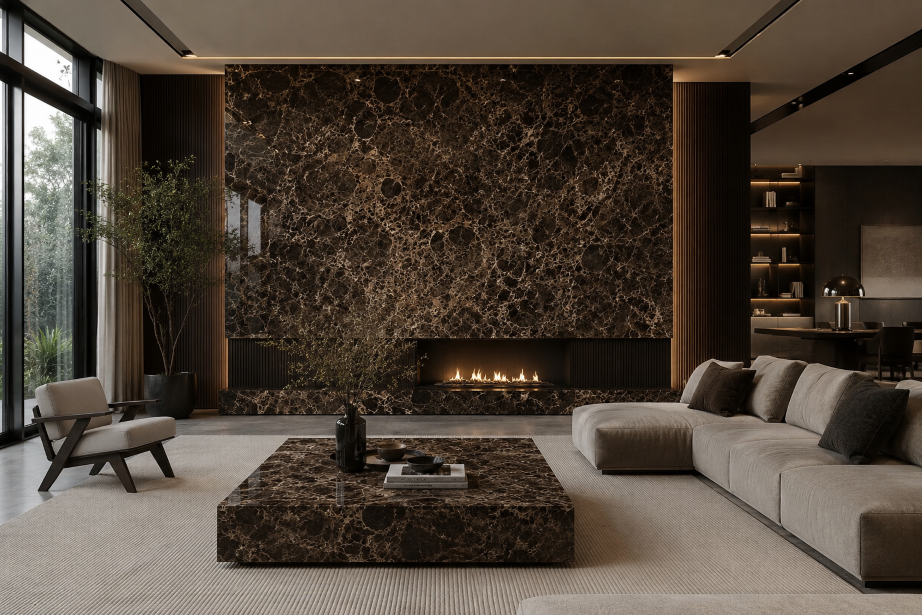
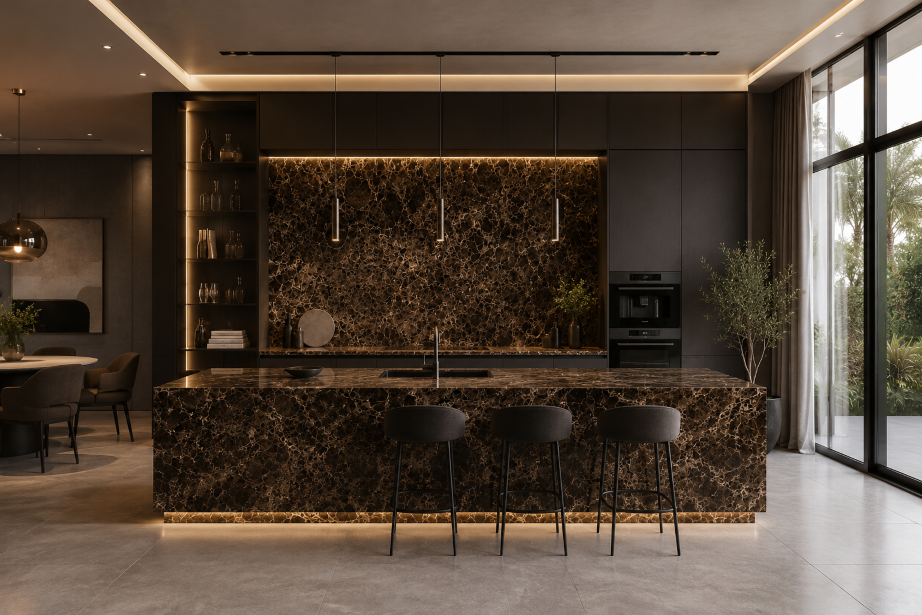
Emperador Dark marble is characterized by a background that ranges between different shades of dark brown, gray, and black, interwoven with streaks in various tones ranging from white to beige and gold.
The different shades of brown — from the darkest almost black tones to lighter brown nuances — may all be classified as Emperador Dark, although they are sometimes marketed as Emperador Grey, Gold, Bronze, Coffee, or Silver.
Emperador Light
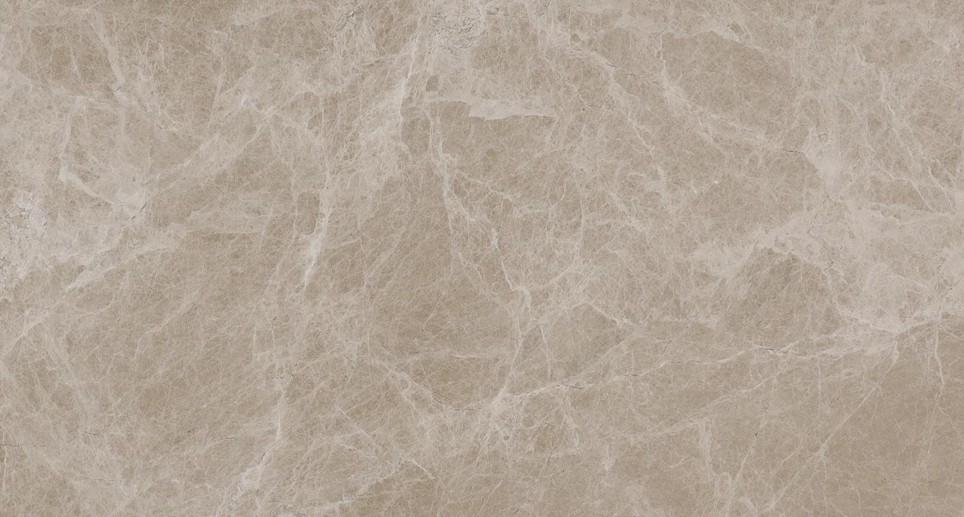
Emperador Light marble features a hazelnut-colored background crossed by lighter veins and shades. It is undoubtedly a delicate and refined variant, adding a touch of uniqueness to any environment in which it is used.
It is a versatile marble mainly used for kitchen countertops, bathrooms, flooring, and wall cladding: its neutral coloring brings elegance to any setting.
Strength and Durability: The Main Technical and Aesthetic Features of Spanish Emperador Marbles
Emperador marble is a brecciated stone particularly renowned for its robustness and high resistance to foot traffic and wear, qualities that make it an excellent choice for high-traffic architectural projects. This durability derives from the geological formation of the material: the limestone matrix that binds the clasts is extremely compact, drastically reducing the material’s micro-porosity.
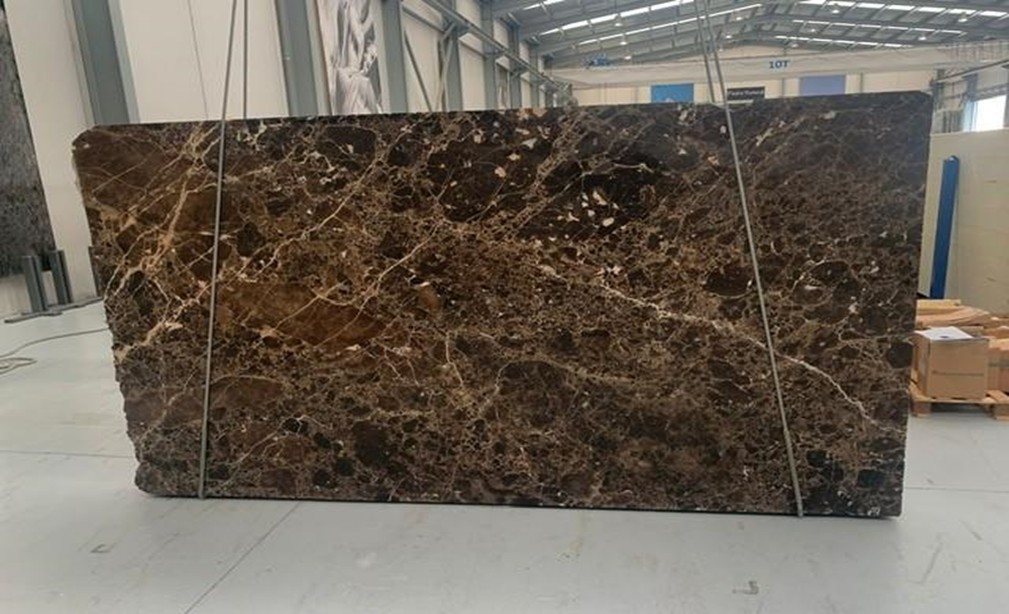
From a technical perspective, Emperador marble offers excellent compressive strength and surface hardness, allowing it to maintain its shine over time even under mechanical stress. Its “closed” structure limits moisture absorption compared to softer limestones, making it extremely versatile: from monumental flooring to luxury interior cladding and bathroom furnishings.
Despite its strength, the stone maintains extraordinary aesthetic flexibility, lending itself to precision craftsmanship such as complex edge shaping or intricate inlays, without the risk of easy chipping or cracking.
Below are the main technical characteristics of Emperador Dark and Emperador Light marbles.
Emperador dark:
| STANDARD | U.M. | AVERAGE VALUE |
| absorption coefficient | % | 0.4 |
| Apparent density | grs/cm3 | 2,65 |
| Porosity | % | 1,2 |
| Flexural strength | Kg/cm2 | 210 |
| Wear resistance | 0,55 mm | |
| Compressive strength | Kg/cm2 | 1.597 |
Emperador light:
| STANDARD | U.M. | AVERAGE VALUE |
| absorption coefficient | % | 0.4 |
| Apparent density | grs/cm3 | 2,65 |
| Porosity | % | 1,2 |
| Flexural strength | Kg/cm2 | 210 |
| Wear resistance | 3,22 mm | |
| Compressive strength | Kg/cm2 | 1.597 |
| Frost resistance | Kg/cm2 | 1.375 |
Recommended Processing and Finishes
It can be enhanced with every type of finish, from honing to sandblasting, and can also be bush-hammered or tumbled, but its colours achieve maximum brilliance when polished. Mirror polishing and honing are in fact the most widely used finishes for Emperador marbles, as they further emphasize the beauty and elegance of the material.
However, this marble also adapts to other types of processing depending on project requirements.
Brushing gives the surface a velvety touch, while sandblasting, bush-hammering, and tumbling make it aesthetically more suitable for rustic settings and environments.
Main Applications of Emperador Marbles
For centuries, the shades and veining of Emperador marble have enriched homes and palaces of every era and style.
Its remarkable wear resistance makes it suitable for both indoor and outdoor environments: it is widely used for wall and floor coverings, staircases, kitchen countertops, shower trays, and shower cladding.
In flooring applications, Emperador Dark marble is often paired with natural stones in neutral beige tones to create a magnificent chromatic effect.
Its brown background, enriched by light golden veins, also makes it suitable for creating decorative elements of great aesthetic and artistic value, such as columns, mosaics, artworks, and fountains.
Emperador Marbles at Alberti & Alberti
At Alberti & Alberti, we manage every production stage of natural stone processing, from selection to finishing, supplying consultancy and materials to architects, marble workers, retailers, contractors, distributors, construction companies, and other B2B operators. We do not supply private customers.
We purchase Emperador marble blocks directly from trusted quarry suppliers through our local representative, who performs inspections to select only premium-grade blocks. The blocks are then sawn into slabs using our own gang saws; afterwards, the slabs are reinforced with mesh backing, resin-treated, and surface-finished according to market requirements.
At Alberti & Alberti warehouses, we stock a wide assortment of Emperador Dark and Emperador Light slabs in different sizes, thicknesses, and finishes: check availability.
Or contact us for custom slab production.
FAQ
- Do Emperador marbles require surface resin treatment?
Yes. As a natural breccia, Emperador inherently contains micro-fractures and small geological voids. Almost all high-quality slabs are factory-resined using transparent or pigmented epoxy resins. This process is not a defect, but a technical added value that increases structural resistance and ensures a perfectly polished surface free from visible porosity.
- Is Spanish Emperador suitable for outdoor applications or humid environments?
Outdoor use is not recommended, as direct exposure to UV rays and weather conditions may cause fading of the brown pigments and deterioration of the limestone matrix. As for humid areas (bathrooms, spas), it is widely used, but professional water- and oil-repellent sealing is essential to prevent staining and dulling caused by limescale.
- How is vein continuity managed (open-book / bookmatch)?
Emperador marble, especially the Dark variety, is one of the preferred materials for bookmatched installations. When placing an order, it is important to verify that the blocks have been cut sequentially. Thanks to its dense network of veins, the resulting mirrored effect is highly dramatic and is often used for accent walls or hotel lobbies.
- Why are micro-holes or “imperfections” visible on the polished surface under backlighting?
This is an intrinsic characteristic of Emperador’s brecciated nature. During processing, natural voids are filled with specific resins, but under backlighting, tiny pores or differences in refraction may still appear. These are not manufacturing defects, but proof of the authenticity of the sedimentary material. For projects requiring the highest visual perfection, an “extra-polished” finish with protective natural waxes is recommended.